How we made
The Beginning
A call for proposals
Science Gallery Bengaluru put out a call for proposals for a documentary film about Bangalore. Over the years, the topic of water in the city has been both interesting and scary.
This was what the first proposal looked like:
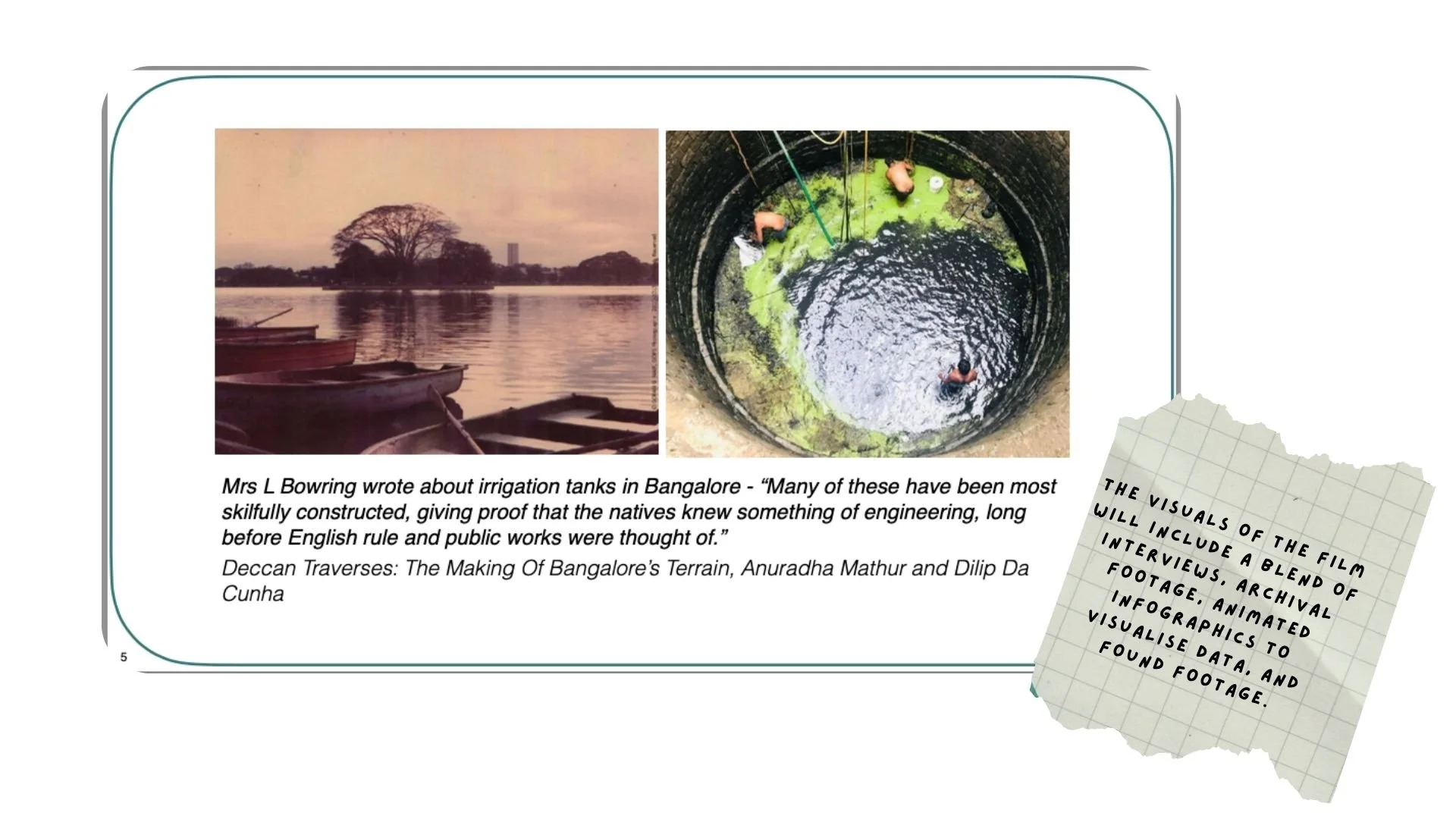
Eventually, through conversations with the Science Gallery team, we came to narrow the focus: this film would be the story of water after it leaves our homes.
It was still vague, and left room for a lot of doubt - which is frustrating, and always a good sign! It felt important to acknowledge the climate anxiety that comes with living in a city in the current world.
Writing a documentary
How do you create a hook to engage viewers when your film is about a subject as unappealing as sewage?
With emotions – specifically:
nostalgia, love, and personal history.
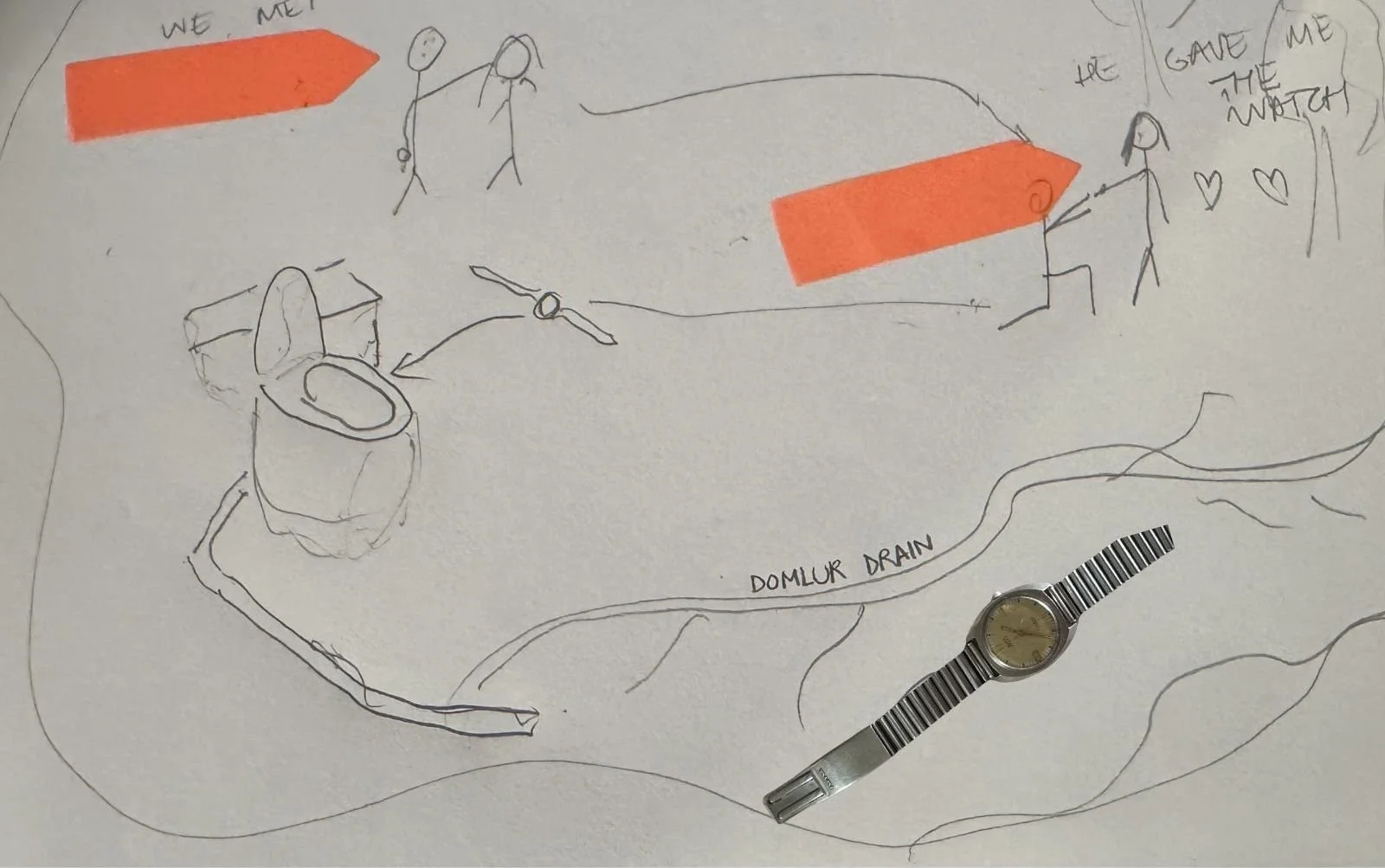
Instead of leading with facts and figures and data, we led with nostalgia. Down The Drain follows the imagined journey of an HMT watch (the kind someone in your family has one of) after it's accidentally flushed down a toilet. Through this, we trace the invisible systems that carry our water away: broken systems, exploited labour, and disappearing stormwater drains and lakes.
Going Down The Drain
Research
Crewing Up
Planning
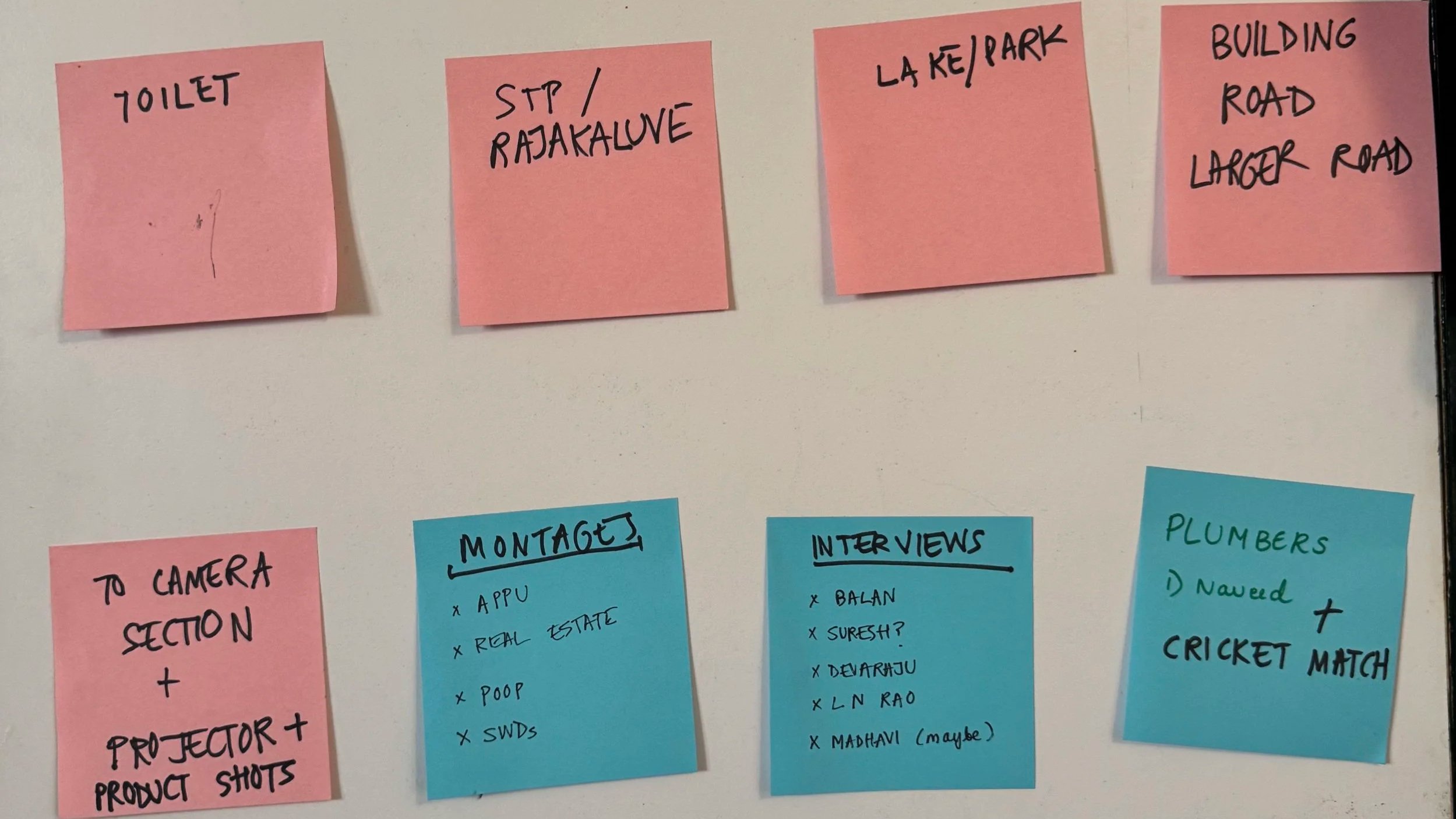
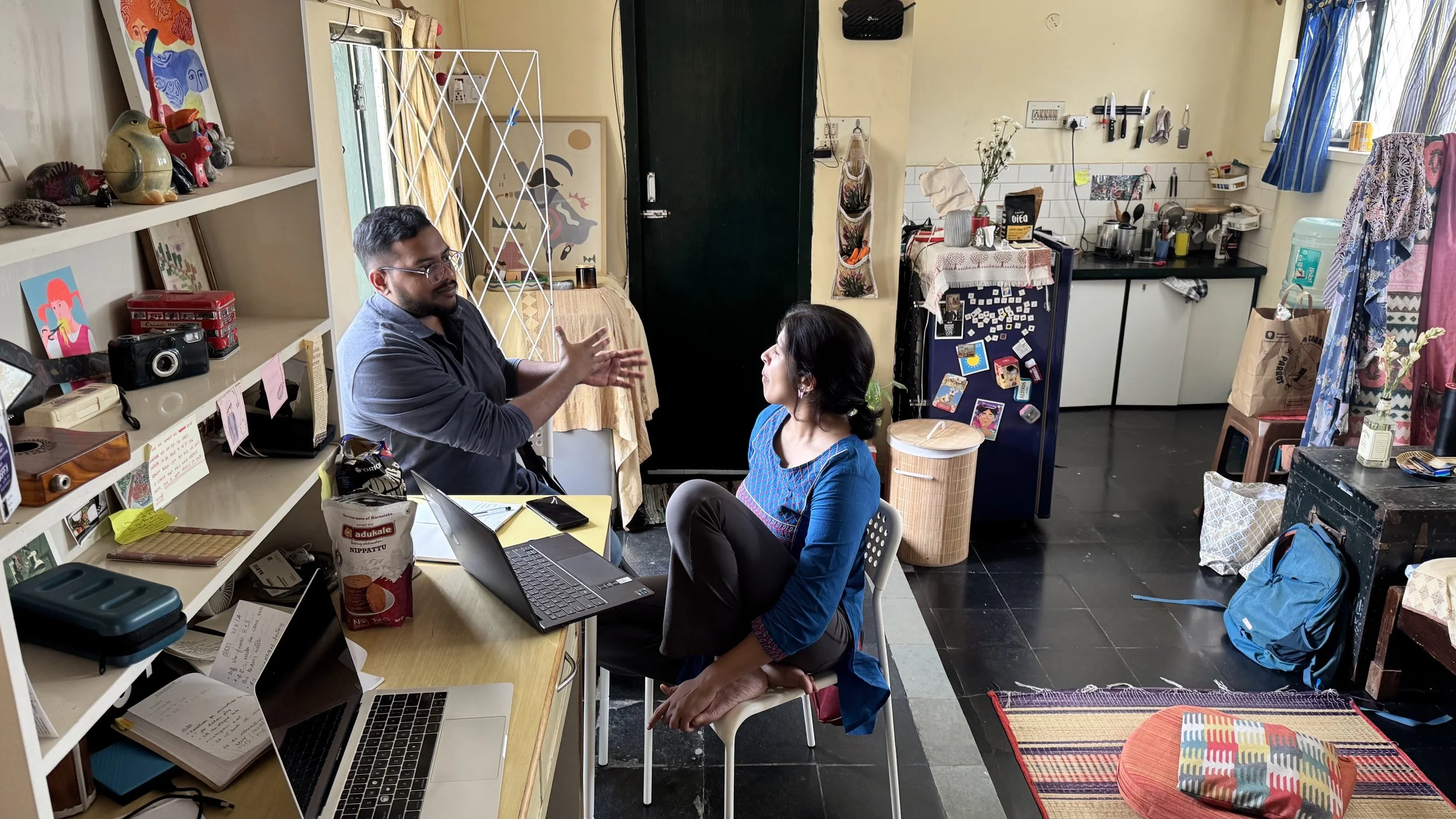
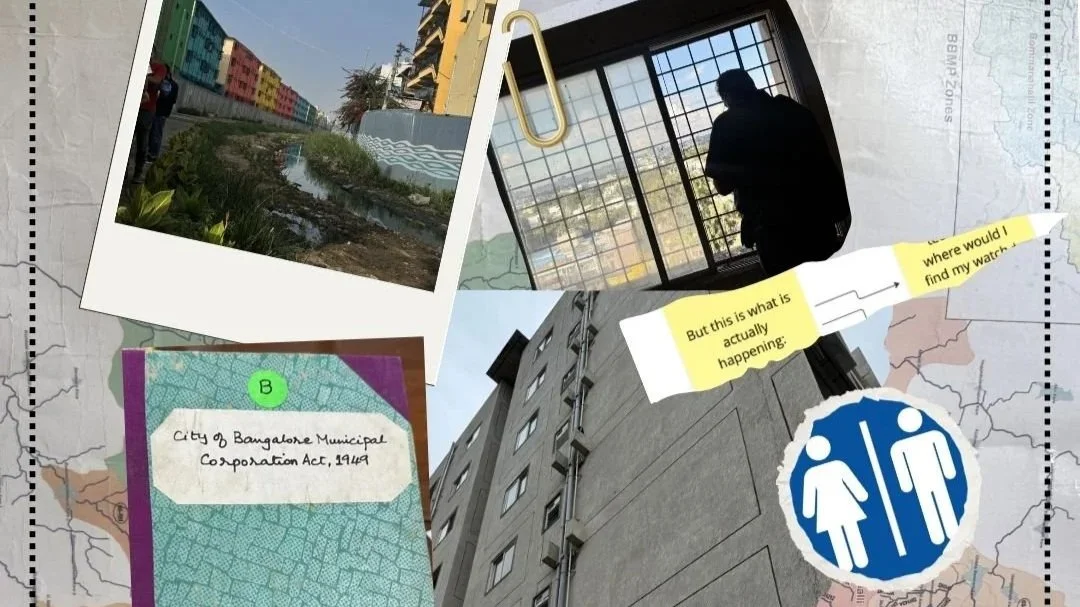
We talked to experts, to sanitation workers, to advocacy organisations, to urbanists, to interested people, to plumbers, to hydrologists... we asked questions, and basically got obsessed with sewage
We found like-minded people who were aligned with and excited about kind of work we wanted to do. Most importantly, we believe in vibe hires. And if all goes well, you find colleagues who are willing to go to the BWSSB office day after day to find out how to get filming permissions.
Planning is EVERYTHING. You plan as much as you can, so that when you get to your location, you can allow for magic to happen and for conversations to flow. With a flexible and enthusiastic crew, this part of the process feels easy.
The Shoot
When you go on shoot, hardly anything goes according to plan. But with the right energy in the crew, everything works out beautifully.
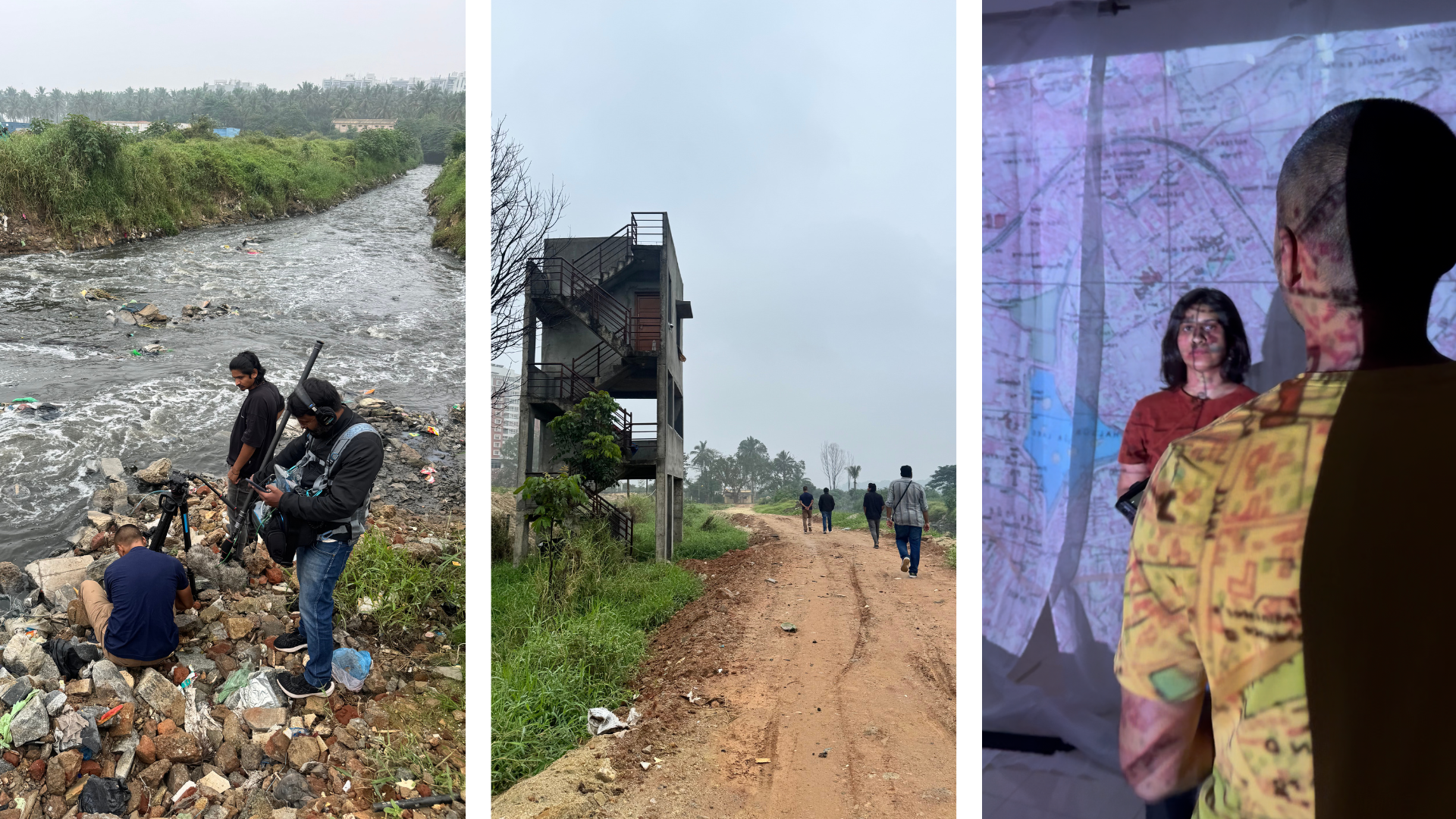
We had a DOP and location sound recordist who had no qualms about jumping into sewage drains. A producer who calmly handled angry security personnel. An AD who coordinated many moving parts, and many friends who joined in to make things work.
Animation and Mixed Media
How do you show invisible and complex systems?
You collaborate with some kick-ass animators!
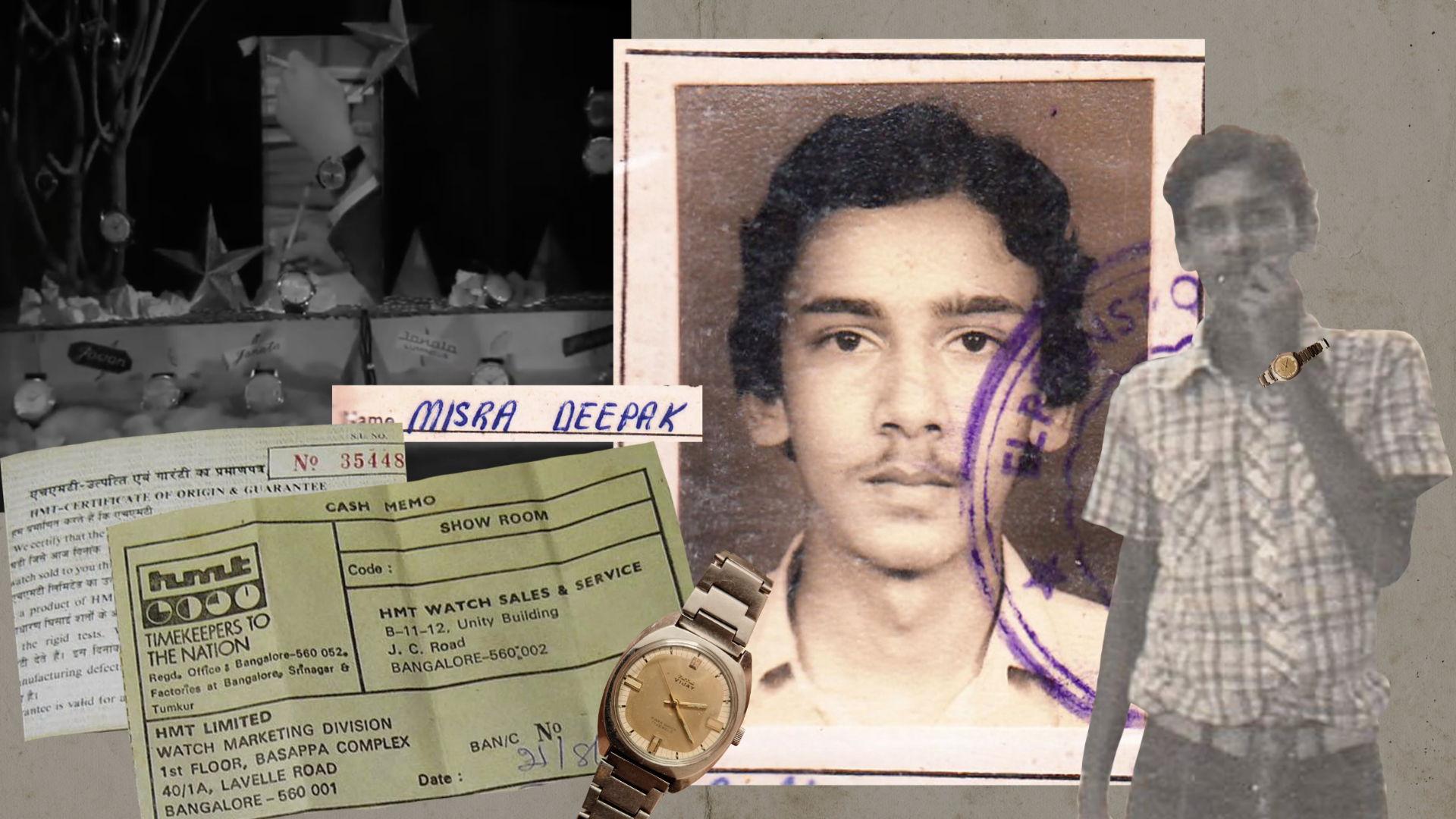
Keeping the visual tone light, and engaging
Deepti and Saket from Paus and their team of animators used a variety of techniques to make very cool visuals. We agreed that information like statistics and numbers are difficult to follow, and we wanted to present them in a way that was consumable and understandable.
This is a process that had to happen simultaneously as we were shooting. It was challenging because some portions were dependent on having a locked edit and live action footage to animate over. Our animators worked overtime to make this happen.
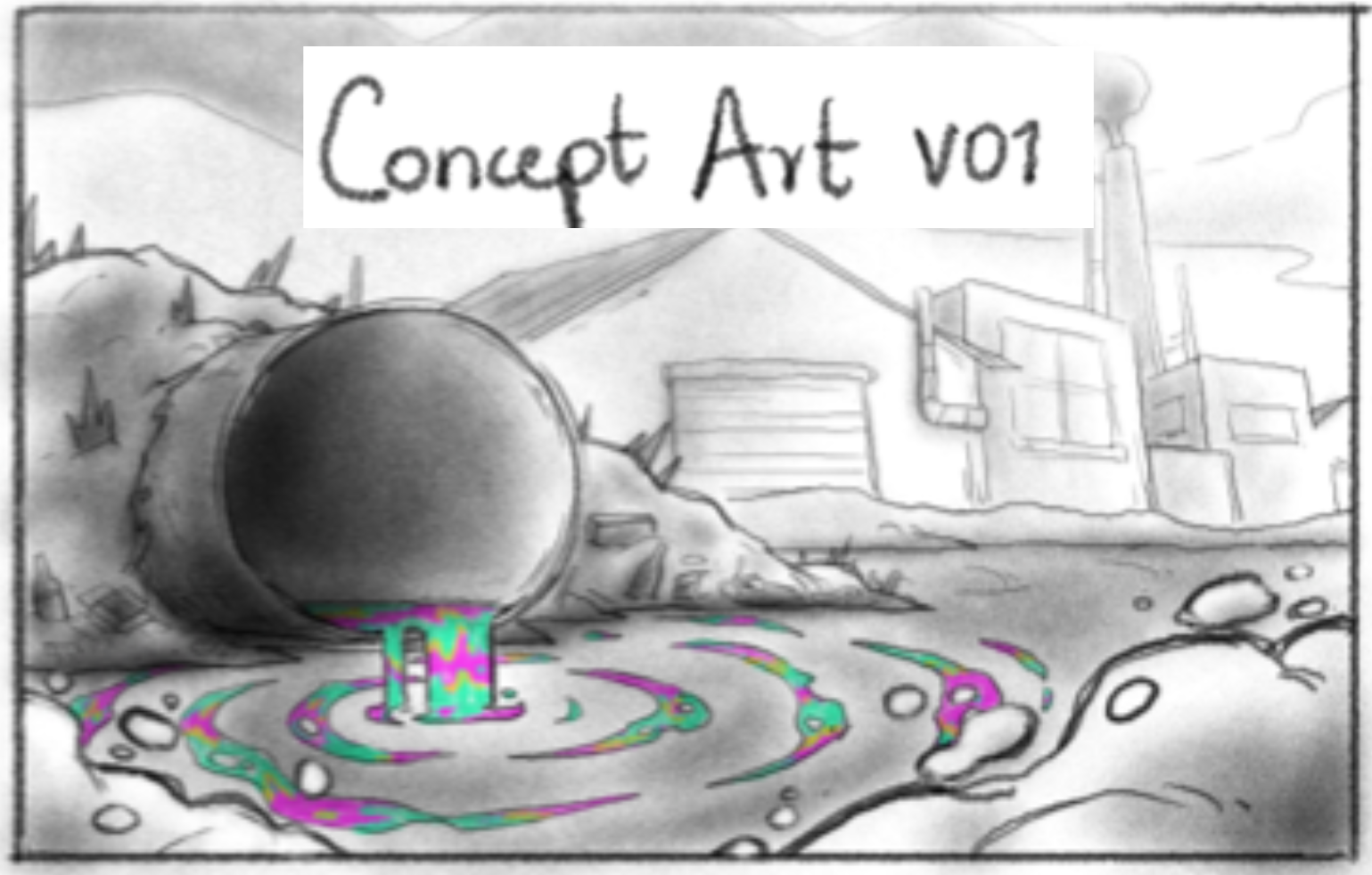
Showing a broken system with 2D animation
One of the important insights from the fiction storyline was this: “Is this the city you want your kids to grow up in?”
We wanted to communicate this sentiment, and it felt too cliched to do it using news clips. When Oorjit came on board, he was excited to tell this story using his unique style of 2D animation - sometimes, abstraction communicates much better than spelling it out does. Oorjit’s job was to trace the possible journey of the watch through the city’s sewage system while painting a doomsday picture.
Puppet Animation
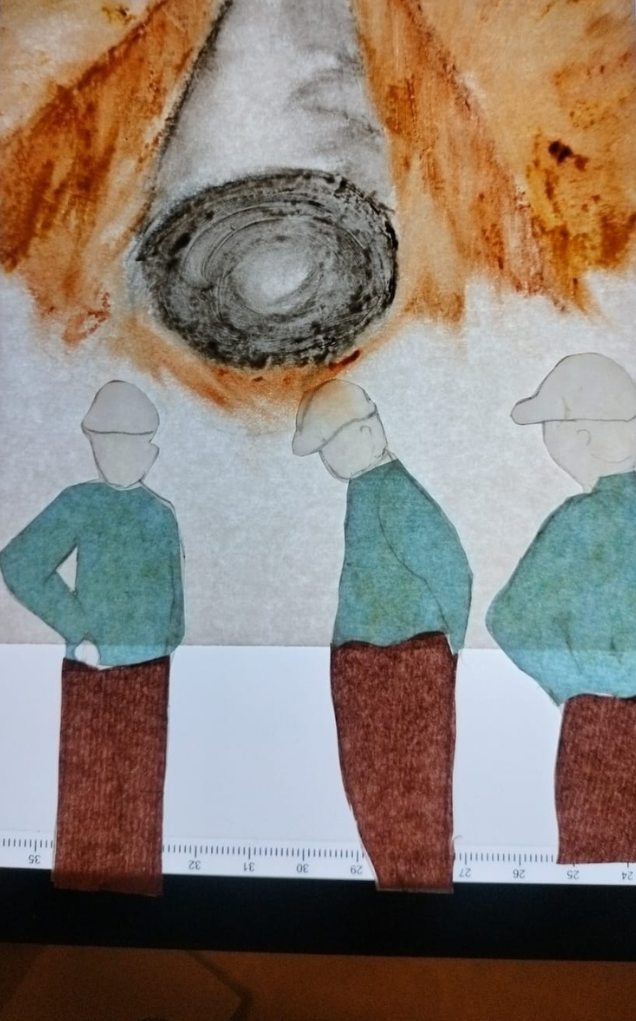
Doom and gloom and guilt are not very constructive feelings; hope, however, is. Puppet animation has a certain magical appeal - it speaks to an ancient feeling of coming together and watching something unfold.
When we speak of hope and looking to the future in the film, we wanted it to have a lighter and hopeful tone. Debosmita and Ahmad collaborated with us on this section, and they blew our minds with each handmade puppet.
There was a lot of joy in the process of creating, which we believe reflects in the final product.
Stitching It Together
Agnes Varda coined the term cinécriture, or “cine-writing,” to describe her unique method of filmmaking, whereby every aspect of the film is carefully planned in order to extract the greatest possible resonance from the juxtaposition of image and sound and the overall rhythm of the film defined by its editing structure.
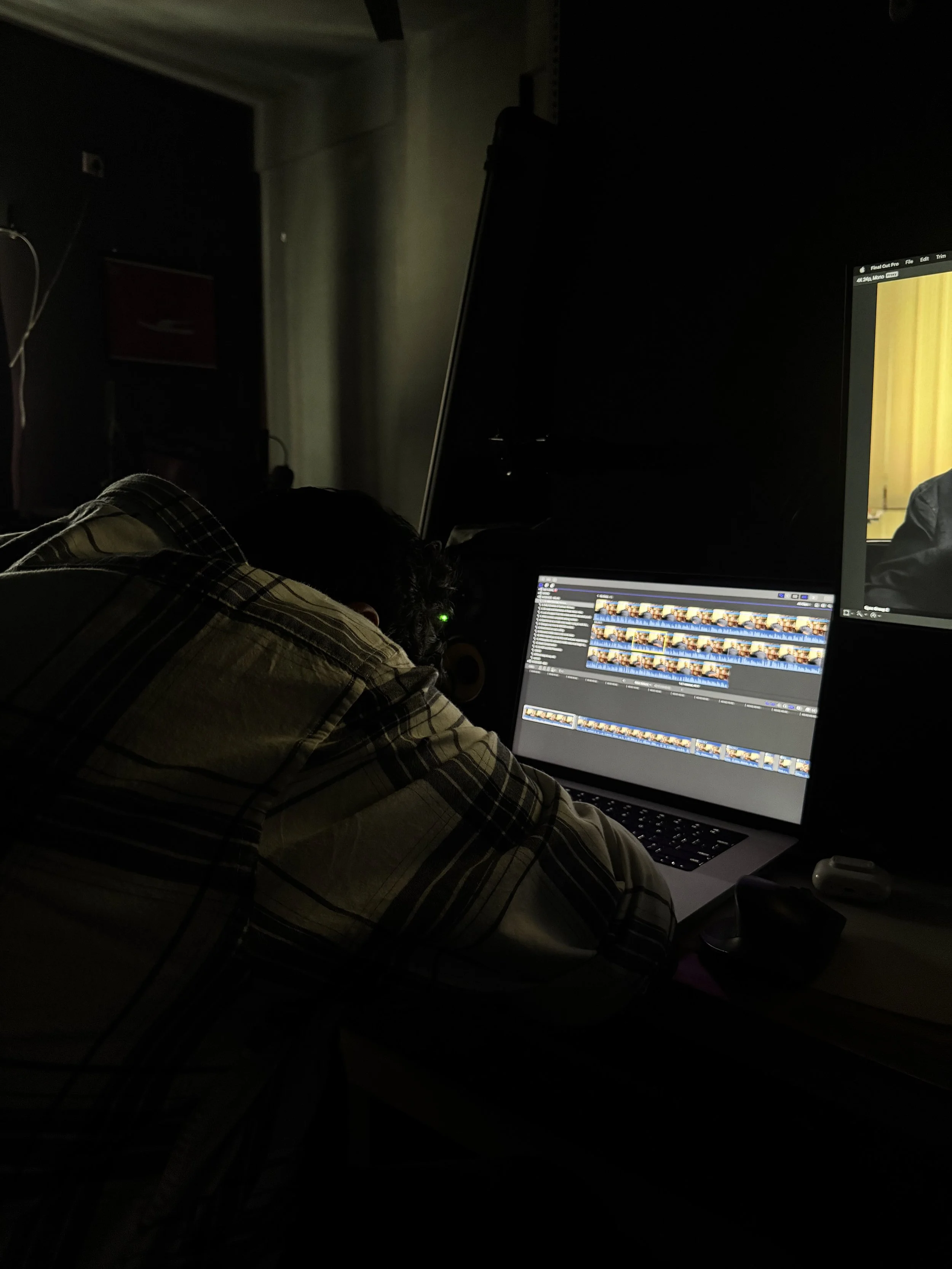
The editing process was like climbing a mountain. The edit table is where a film often comes together, and that was the case for Down The Drain. Apart from interviews we had shot, we also had many infographics, blank spaces where animation would later come in, mixed media, and footage from various sources. The editing process can feel like sculpting. It involved some sleepless nights and a lot of tea breaks. Eventually an editor and director on the same page and asking the same questions gives shape to the narrative.
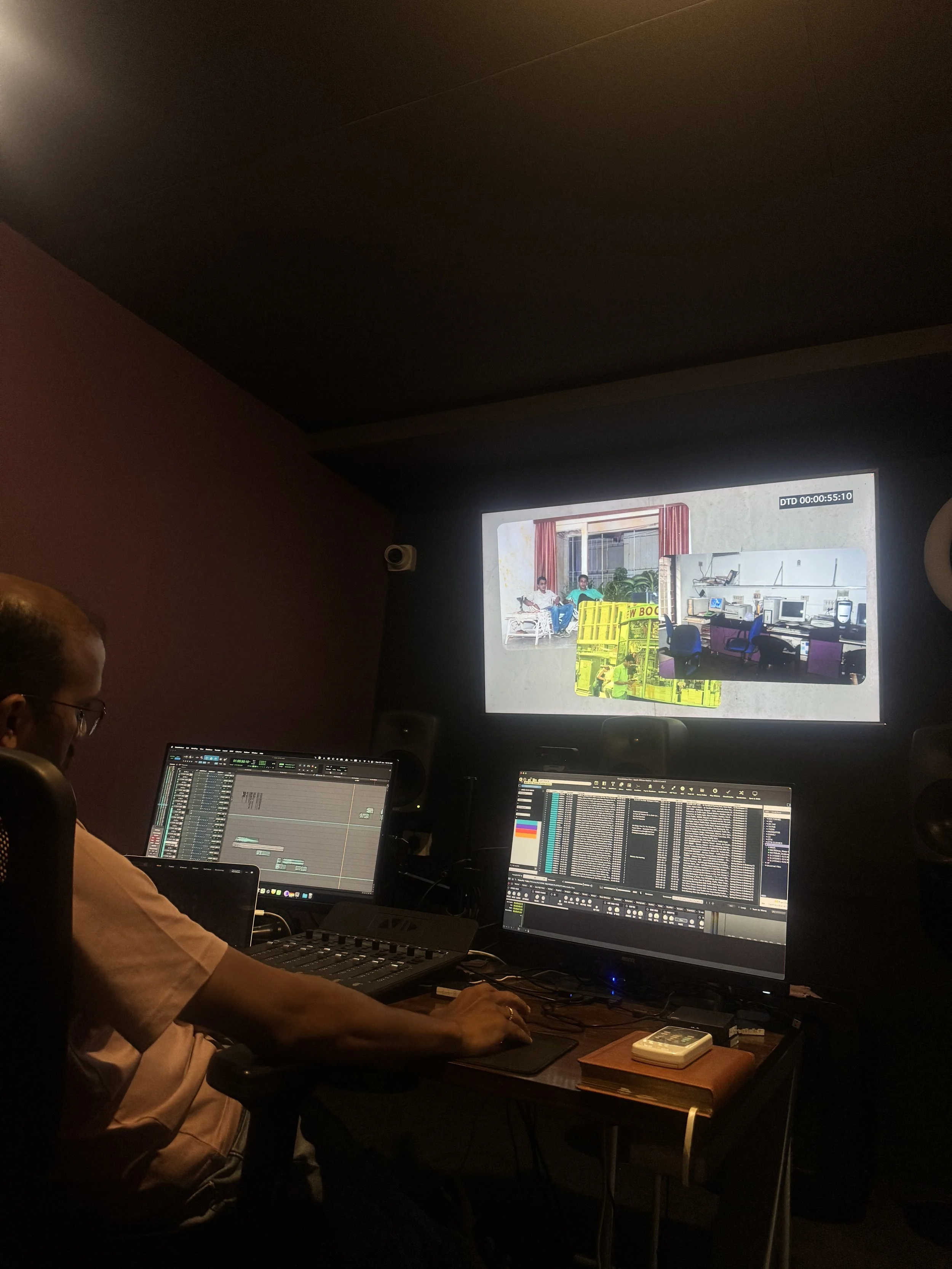
If done right, no one notices the sound design and colour grade. But there is a lot of thought, time, and trial and error that goes into nailing those things. Determining how each visual sounds - especially important with animation and mixed- media. Shreyank was amazing at this.
The Afterlife
What happens to a film after it’s done?
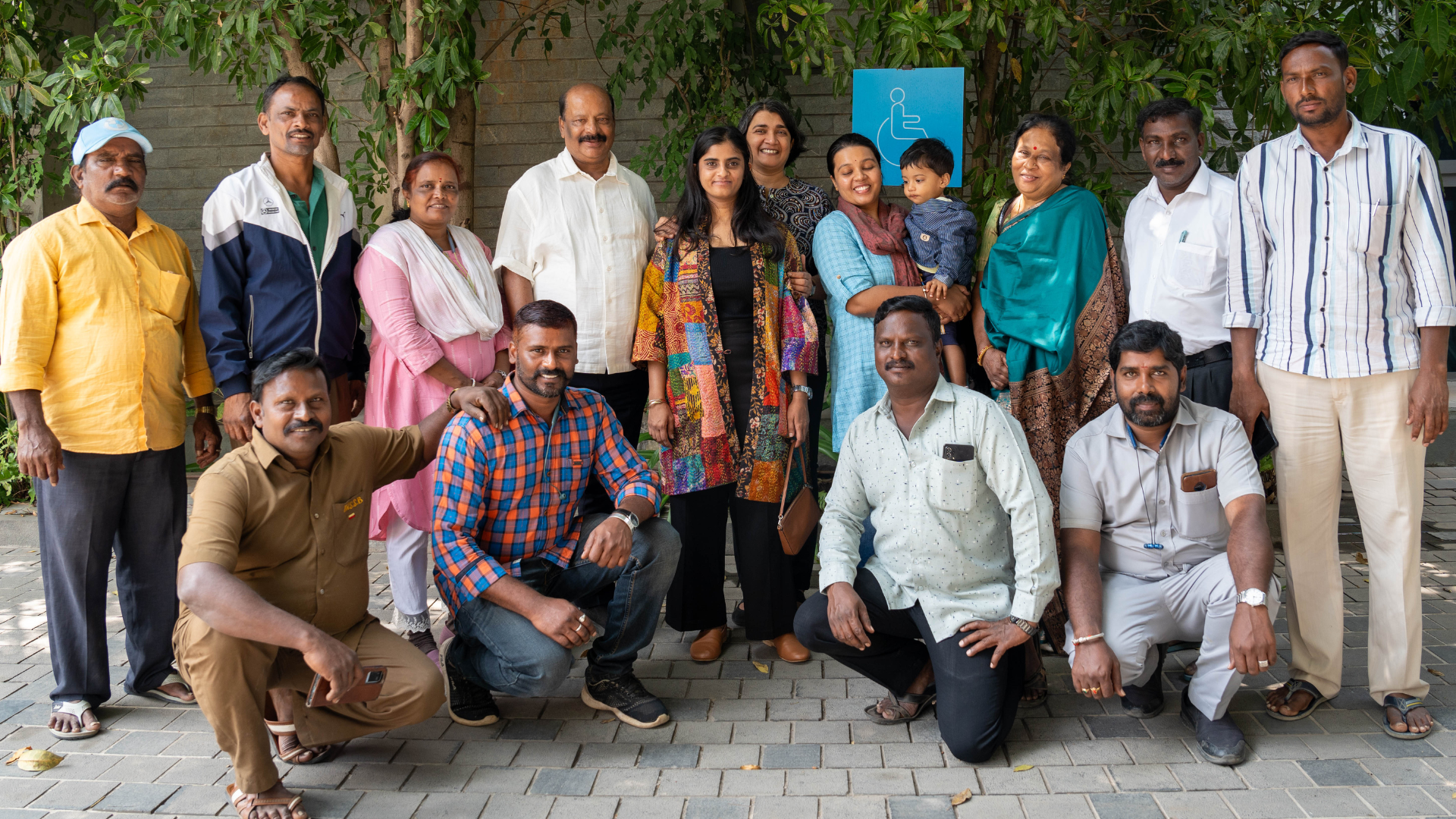
The film continues to screen at various venues in Bangalore, few educational institutes in Bangalore, and was also shown in Pune, and in Berlin.
The conversations that the filmed sparked at the various screening venues have been so insightful.
The film was part of ALTEFF '25, after which we uploaded it online. We hope that many more citizens watch it and feel more connected to the city when they understand sewage better.